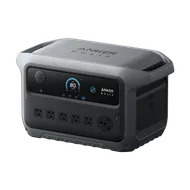
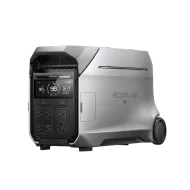
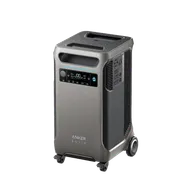
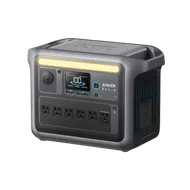
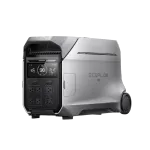
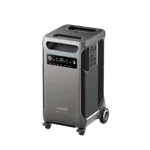
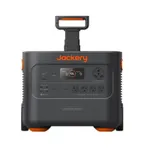
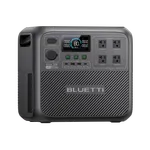
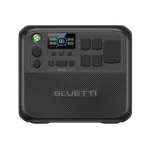
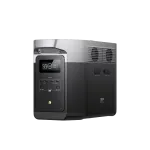
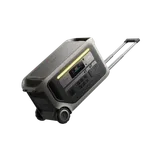
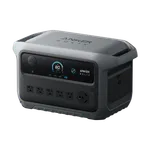
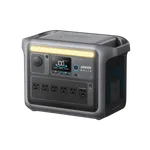
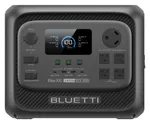
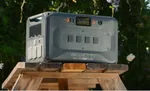
- 2,048Wh
- 2,400W output
- 800W solar
- Expandable
Best value 2kWh for most buyers
- 4000-cycle battery at a mid-range price
- 41.7 lb — notably lighter than most 2kWh rivals
- 10ms UPS switchover
- 800W solar input is the lowest in the 2kWh class
We compared 17 power stations on capacity, output, solar input and price — with RV sizers and solar calculators, so you buy the right watt-hours the first time.
One clear winner for each job. Tap a card for the full review.

Best value 2kWh for most buyers

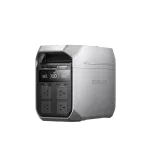
Whole-home backup during multi-day outages

240V appliances and EV trickle-charging without a panel install

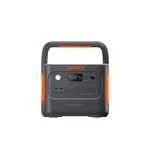
First power station / camping and short outages
Swipe for more picks →
Size a station for fridge, Starlink and cooking on the road.
Silent battery vs gas: cost, noise and runtime compared.
| Model | Capacity | Output | Solar input | Weight | Price tier | Buy |
|---|---|---|---|---|---|---|
| EcoFlow DELTA Pro 3 | 4,096Wh | 4,000W | 2,600W | 113.5 lb | Price tier: Premium | Check price of the EcoFlow DELTA Pro 3 on Amazon |
| Anker SOLIX F3800 | 3,840Wh | 6,000W | 2,400W | 132 lb | Price tier: Upper mid | Check price of the Anker SOLIX F3800 on Amazon |
| Anker SOLIX F3000 | 3,072Wh | 3,600W | 2,400W | 55.1 lb | Price tier: Mid-range | Check price of the Anker SOLIX F3000 on Amazon |
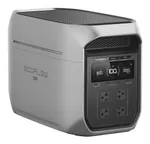
| BLUETTI Elite 300 | 3,014Wh | 2,400W | 1,200W | 59 lb | Price tier: Mid-range | Check price of the BLUETTI Elite 300 on Amazon |
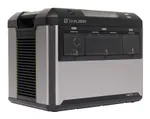
| BLUETTI Apex 300 | 2,765Wh | 3,840W | 2,400W | 84 lb | Price tier: Upper mid | Check price of the BLUETTI Apex 300 on Amazon |
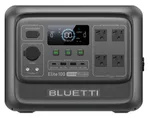
| BLUETTI Elite 200 V2 | 2,073Wh | 2,600W | 1,000W | 53.4 lb | Price tier: Mid-range | Check price of the BLUETTI Elite 200 V2 on Amazon |
Want these numbers as a spreadsheet? Download the same table as CSV or JSON(CC BY 4.0, free to cite).
Every portable power station review on the site, not just the shortlist.

Whole-home backup during multi-day outages

240V appliances and EV trickle-charging without a panel install

Expandable home backup that starts at 2kWh

Longest battery lifespan in a mid-size unit

Solar-first setups with third-party panels

The safe mainstream 2kWh pick

3kWh home backup with fast solar recharge

Best value 2kWh for most buyers

First power station / camping and short outages

Maximum output from a 1kWh box

Drone owners and creators who live on USB-C

Jackery ecosystem buyers who want expansion

Van, RV and home backup that needs about 3kWh in a compact case

Whole-home backup and RV use with 120V/240V output and big expansion

A 3kW expandable station for home backup and mobile use

Truck, van and off-road setups that need rugged build and many ports

A light 1kWh station for small home-office UPS use, camping and short outages
Check off your devices and get the battery size you actually need, with matching stations.
Size my setupSee real recharge times for your panels on every station — and spot clipped arrays.
Pair my panelsFuel, maintenance and upfront cost side by side for your outage hours.
Do the mathCan a power station run a coffee maker or electric kettle? Sizing by watts, runtime math per cup, and which stations handle 1,200 to 1,500 W heating loads.
Medical backupCan a power station run an oxygen concentrator? Sizing by flow rate, runtime math, pure sine wave and UPS transfer time, and why cylinders are still the plan.
Winter outageCan a power station run a pellet stove in an outage? Yes, it is a plug-in load. Watts to check, igniter surge, runtime by station and the smoke risk.
Holiday powerHow long a power station runs Christmas lights and inflatables: watts by display size, nightly Wh math, cold-weather limits, and which size fits a yard.
Buying adviceHow long a power station runs a TV during an outage: real wattage by TV size, runtime math in Wh, and what size station covers a movie night vs a full evening.
Buying adviceHow long a power station runs an electric blanket: wattage by heat setting, overnight runtime math, 12V vs 120V blankets, and cold-weather battery derating.
We answer specific questions — RV sizing, solar pairing, generator math — instead of re-ranking "best power station" for the tenth time.
Capacity, output and solar figures verified across manufacturers, retailers and published reviews, with sources on every model.
Calculators built from real specs turn "which station?" into a number, not a guess.