AC200L specs
| Brand | BLUETTI |
|---|---|
| Released | 2023 |
| Capacity | 2,048Wh |
| Continuous output | 2,400W |
| Surge output | 3,600W |
| Battery | LiFePO4, 3,000 cycles to 80% |
| Max solar input | 1,200W |
| AC recharge | ~1 h (2400W AC input) |
| Weight | 61.6 lb |
| Expandable to | 8,192Wh |
| UPS switchover | 20ms |
| Price tier | $$ Mid-range ($700–$1,500). See Amazon for today's price. |
- Wide 12–145V solar input range accepts third-party panels easily.
Specs and street prices compiled October 2026 from manufacturer pages and dated retailer listings — prices move weekly, so confirm on the retailer page before buying.
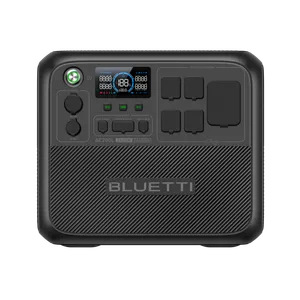
The BLUETTI AC200L is the solar hobbyist’s station: 2048Wh and 2400W wrapped around the most panel-friendly solar input in the 2kWh class — a wide 12–145V range that welcomes third-party panels other stations would reject.
Check current price: BLUETTI AC200L.
Who the AC200L is for (and who should skip it)
Buy it if you already own panels, or want to shop panels on price rather than brand. The 1200W MPPT with its wide voltage window is genuinely more flexible than EcoFlow’s and Anker’s in this class. It’s also the pick if you want a 2kWh base you can grow — expansion to 8.2kWh is rare at this price.
Skip it if you’ll carry it often — 61.6 lb with no wheels is a lot. Skip it if app polish matters; BLUETTI’s app and firmware update history draw more owner complaints than EcoFlow or Anker.
Solar: the headline feature
1200W max input doesn’t sound special until you see the voltage range: 12–145V means series strings of cheap rigid panels just work, where narrower MPPT windows force you into the manufacturer’s own panels. For a permanent cabin or home-battery setup, this flexibility saves real money. A 1000W array of rigid panels (~850W real-world) refills the battery in about 2.5 peak sun hours.
Real-world runtime examples
Usable capacity is ~85% of 2048Wh, about 1741Wh:
- Full-size fridge (~150W avg): ~11.6 hours.
- Laptop + phone charging (~65W): ~27 hours — days of remote work and comms.
- Circular saw (~800W intermittent): ~2 hours of cutting — a real job-site session.
- Camping fridge (~45W): ~38 hours — a long weekend off-grid.
Capacity and expansion
2048Wh base, expandable to ~8.2kWh with B230/B300 batteries — enough for multi-day essentials with solar help. 2400W output with 3600W surge handles fridges, microwaves and tools; 20ms UPS covers PCs and networking.
How it compares
Versus the Elite 200 V2: the AC200L wins on expansion and solar flexibility; the Elite wins on cycle life and portability. Versus the DELTA 2 Max: EcoFlow is lighter with a better app; BLUETTI takes more kinds of panels. Pair it right with our solar pairing guide, or see ecoflow vs anker vs jackery for the brand trade-offs.
The panel-shopper’s advantage
Because the 12–145V window accepts almost any panel, you can build a 1000W array from budget rigid panels (~$0.25/W street) for roughly $250 — half the cost of brand-matched portable panels. Wire four 250W panels in series for ~120V open-circuit and the MPPT hums along. This is the cheapest per-watt solar setup in the 2kWh class, and the whole reason to buy this station over sleeker rivals.
App and firmware caveats
BLUETTI’s app handles the essentials — charge limits, UPS modes, firmware updates — but owner forums report more firmware quirks than EcoFlow or Anker: phantom drain bugs, charge-limit resets after updates. The fix is boring but effective: update firmware the day it arrives, verify your settings afterward, and don’t run beta firmware on a box your fridge depends on.
AC200L vs Elite 200 V2: the BLUETTI decision
Buy the AC200L if your system will grow: expansion to 8.2kWh and the panel-flexible 1200W solar input are for people building toward something. Buy the Elite 200 V2 if the battery will be cycled hard every day and never expanded — its 6000-cycle cells are built for the marathon, and it’s 8 lb lighter. Same brand, opposite philosophies; pick based on whether your future is bigger or busier.
Bottom line
The AC200L is the station for people who shop panels like commodities: the 12–145V solar window and 8.2kWh expansion path reward buyers building a real system. Accept the weight and the merely-adequate app, and it’s the most flexible 2kWh box here.