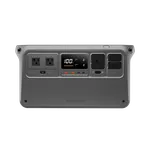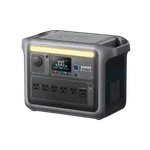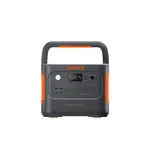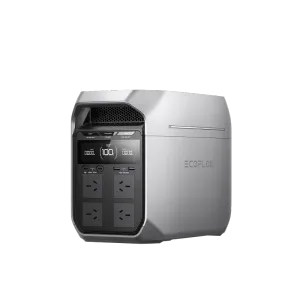
DELTA 3 Plus specs
| Brand | EcoFlow |
|---|---|
| Released | 2025 |
| Capacity | 1,024Wh |
| Continuous output | 2,400W |
| Surge output | 4,800W |
| Battery | LiFePO4, 3,000 cycles to 80% |
| Max solar input | 500W |
| AC recharge | 0–100% in 56 min (AC) |
| Weight | 28 lb |
| Expandable to | 5,120Wh |
| UPS switchover | 10ms |
| Price tier | $$ Mid-range ($700–$1,500). See Amazon for today's price. |
Specs and street prices compiled October 2026 from manufacturer pages and dated retailer listings — prices move weekly, so confirm on the retailer page before buying.
The EcoFlow DELTA 3 Plus is for buyers who need watts more than watt-hours: a 2400W inverter — the most powerful in the 1kWh class — in a 28 lb box, with an expansion path to 5.1kWh that no rival under $1000 matches.
Check current price: EcoFlow DELTA 3 Plus.
Who the DELTA 3 Plus is for (and who should skip it)
Buy it if your loads are spiky: power tools, kettles, microwaves — things that need a big inverter for short bursts. The 56-minute recharge and 10ms UPS make it a great workshop and home-office companion. At 28 lb it’s also genuinely grabbable, unlike 40+ lb rivals.
Skip it if you mostly need capacity for the money — the Anker C1000 gives you the same 1kWh for roughly half the sale price. The 500W solar cap is also the weakest here, so off-grid solar-first buyers should look at the DJI Power 1000 (800W with the MPPT module) instead.
The inverter is the product
2400W from a 1kWh box is unusual — most rivals this size top out at 1800–2000W. If you’ve ever tripped a smaller station running a microwave, this is the fix. The 4800W surge handles motor startups with ease.
Real-world runtime examples
Usable capacity is ~85% of 1024Wh, about 870Wh:
- 12V camping fridge (~45W): ~19 hours — a full day off-grid.
- Microwave (~1000W): ~52 minutes of cooking — days of reheating.
- Starlink + router (~50W): ~17 hours — a workday and then some.
- Circular saw (~1200W intermittent): ~40 minutes of cutting — a real workshop session.
Expansion: 1kWh today, 5kWh later
This is the clever bit: start with 1024Wh, add DELTA 3 extra batteries up to 5120Wh total. No other budget station grows this far, which makes the 3 Plus the rare 1kWh unit you won’t outgrow.
How it compares
Versus the Anker C1000: EcoFlow wins on output and expansion; Anker wins on price and recharge speed. Versus the DJI Power 1000: EcoFlow wins on AC output and expandability; DJI wins on USB-C power and silence. For pure value, see best budget power stations, and for sizing logic, what size power station.
Workshop duty
This is the 3 Plus’s best role: a 28 lb box that lives in the garage and runs a miter saw, shop vac, or heat gun for short bursts that would trip lesser 1kWh stations. The 56-minute recharge means it’s ready again before your next project session. The 10ms UPS is a bonus — park it under the workbench PC and brownouts stop killing your renders.
The solar compromise, quantified
500W of panels (~400W real-world) refill the 1024Wh battery in about 2.5 peak sun hours — fine for topping up between uses. But a 1000W array, which costs barely more than a 500W one, gains you nothing: the input cap throws the rest away. If your plan is serious off-grid solar, the DJI Power 1000’s 800W cap (with the MPPT module) or a 2kWh-class station is the honest answer.
DELTA 3 Plus vs the DELTA 2: which EcoFlow?
The DELTA 2 (1024Wh, 1800W) is the older sibling — usually cheaper on clearance, with a smaller inverter and slower recharge. The 3 Plus costs more but gives you 2400W (vs 1800W), the 56-minute recharge, and expansion to 5.1kWh. If you’ll never exceed 1800W, the clearance-priced DELTA 2 is the value play. If you’ve ever tripped a station with a microwave or miter saw, the 3 Plus’s inverter is worth the premium.
Bottom line
The DELTA 3 Plus is the 1kWh box for people who trip smaller stations: a 2400W inverter, 56-minute recharge, and 5.1kWh of expansion in a 28 lb package. Buy it for watts; buy the Anker C1000 when the budget matters more than the inverter.